Internal gear pumps are positive displacement pumps used to pump highly viscous fluids such as oils, chemicals, and fuels. Thanks to their special design, these pumps are characterized by minimal leakage and excellent performance at high pressures . In this article, we examine the components of an internal gear pump , their functionality , and their advantages.
 Introduction: What is an internal gear pump?
Internal gear pumps consist of two gears of different sizes: an internal gear (rotating) and an external gear (indexing). Compared to external gear pumps, these pumps offer a more consistent flow and are better suited for applications sensitive to pressure pulsations. These pumps are commonly used in the food, pharmaceutical, oil and gas, and hydraulic industries.
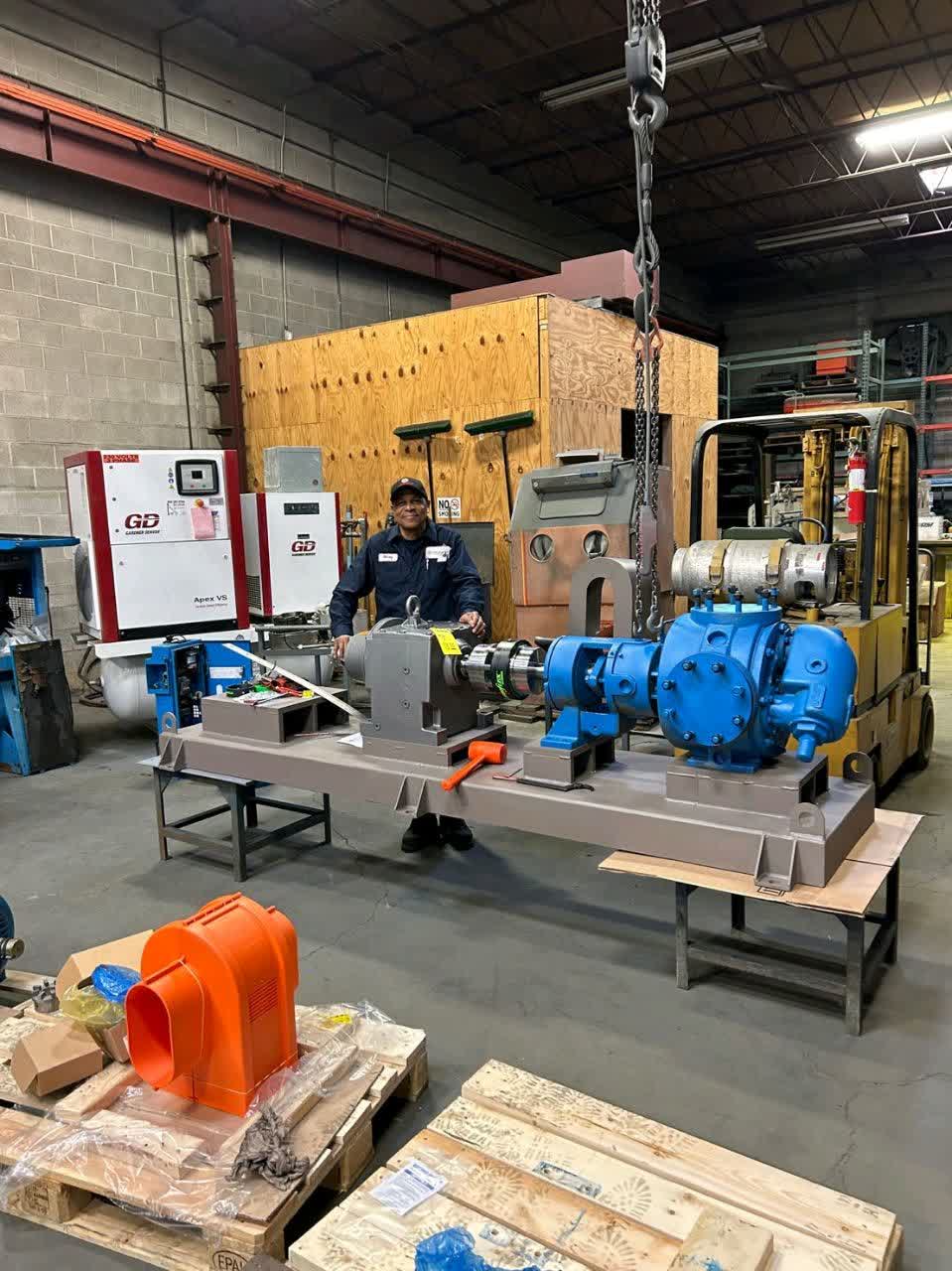 Main components of an internal gear pump
To better understand how this pump works, it’s important to know its components. The most important parts of an internal gear pump are:
1. Internal transmission (rotating)
-
Features : It is an internal gear connected to the shaft and driven by the motor.
-
Materials : Usually made of hardened or stainless steel.
-
Function : The rotation of the rotor sucks in and transports the liquid.
2. External gear (intermediate gear)
-
Features : Inside the rotor is a smaller gear that rotates indirectly (usually via a fixed pin).
-
Material : Similar to the rotor, made of corrosion-resistant material.
-
Function : Moves with the rotor and helps move the fluid .
3. Living
-
Function : A housing that contains all the components of the pump and prevents fluid leakage.
-
Materials : cast iron, steel or aluminum with anti-corrosion coating.
-
Construction : Has inlet and outlet channels for fluid flow.
4. Drive shaft
-
Task : Transfer torque from the motor to the rotor.
-
Material : carbon steel or high strength alloy steel.
5. Seal of the Crescent Moon
-
Features : crescent-shaped component between rotor and pointer.
-
Mission : Prevent fluid backflow and improve pump efficiency.
-
Material : Usually made of brass or a durable composite material.
6. Camp
-
Type : bearing or bushing.
-
Objective : Reduce friction and protect the shaft from axial and radial loads.
7. Seals
-
Type : O-ring or mechanical seal.
-
Mission : Prevent fluid leaks.
8. Sideboard
-
Mission : Cover both sides of the bomb and create a completely sealed room.
-
Material : steel or aluminum, smooth surface.
9. Pressure relief valve
-
Task : Regulate pressure and protect the pump from damage in the event of a sudden increase in pressure.
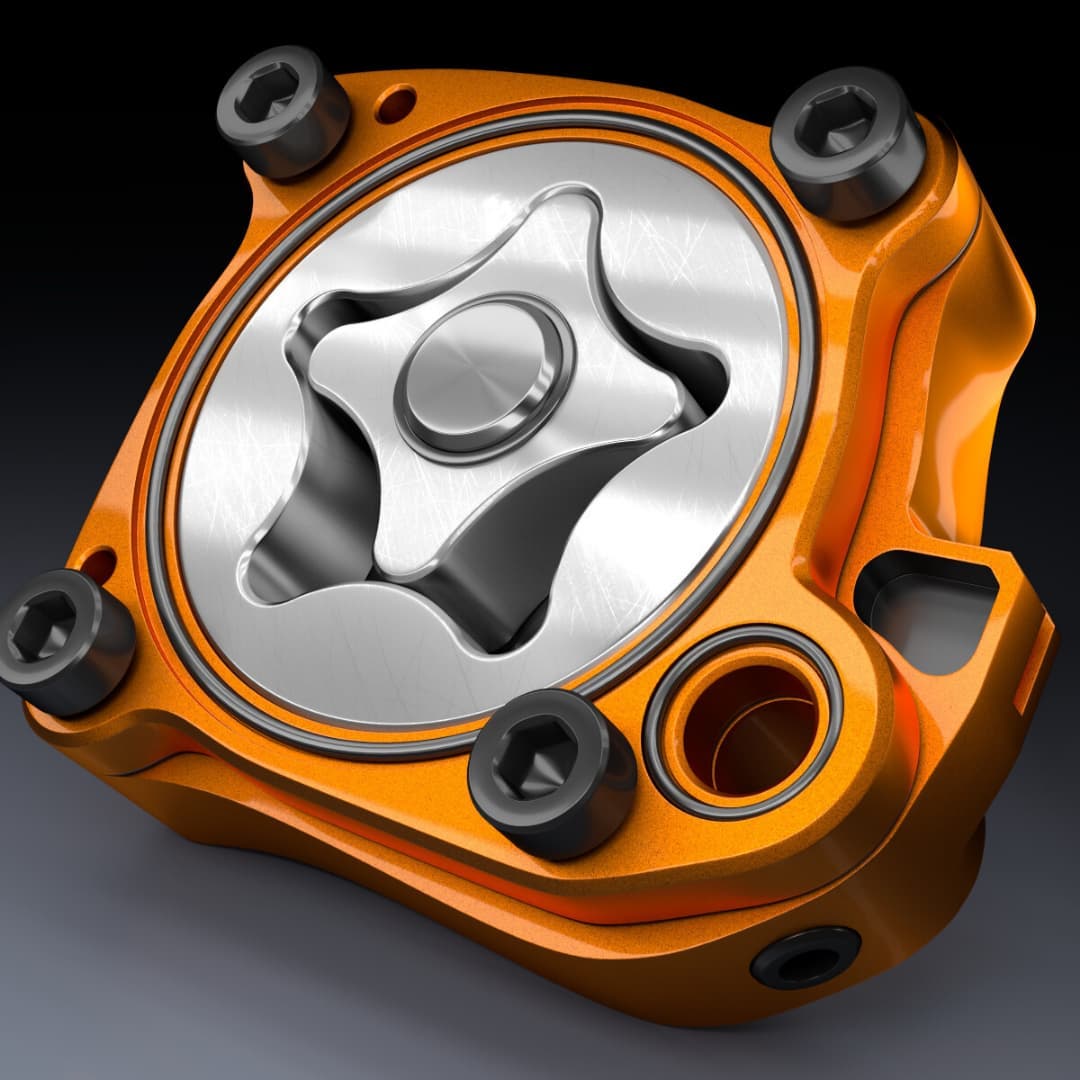 Operating principle of the internal gear pump
-
Suction phase : As the rotor rotates, the gap between the gears on the inlet side increases and liquid is sucked in.
-
Fluid transfer : Fluid is trapped between rotor , index and satellite guard and flows to the outlet.
-
Outlet : On the outlet side, the distance between the fins is reduced and the liquid is expelled under pressure.
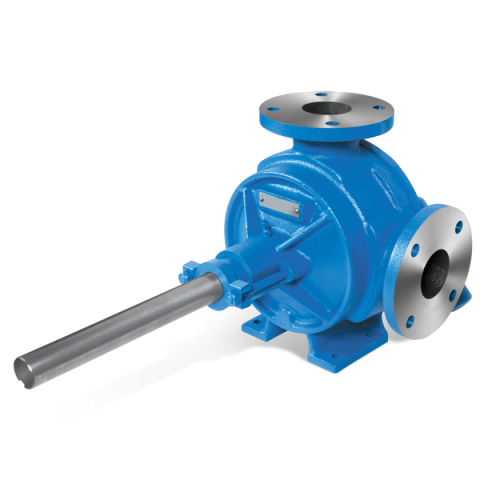 Advantages and disadvantages of internal gear pumps
 Special feature:
-
Smooth flow : Produces less pressure pulsation than external gear pumps.
-
High efficiency : less internal leakage, suitable for viscous liquids.
-
Can work at high pressures : up to 300 bar and even more.
-
Compact design : requires less space than external gear pumps.
 Shortage:
-
Higher construction costs : due to more complex construction.
-
Sensitivity to solid particles : Impurities in the fluid can damage the rotor covers and vanes.
-
Professional maintenance : requires high precision in assembly and maintenance.
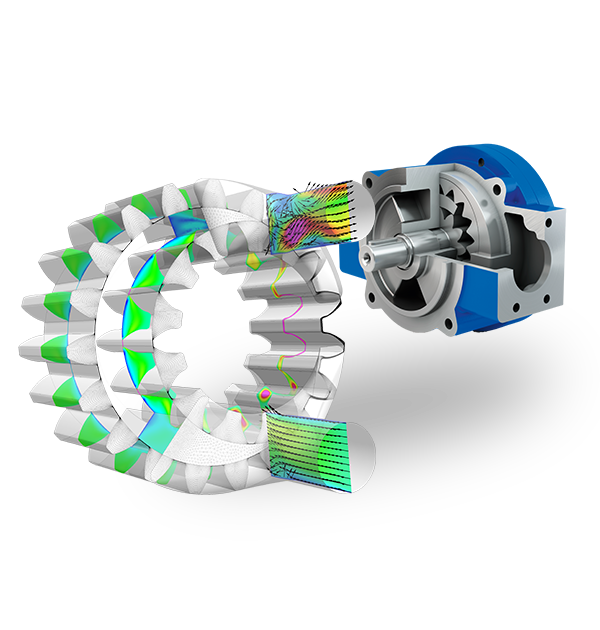 Application of internal gear pumps
-
Food industry : transport of edible oils, chocolate and honey.
-
Chemical industry : Pumping aggressive chemicals and adhesives.
-
Oil industry : transport of heavy oil and bitumen.
-
Hydraulics : high-pressure hydraulic system.
-
Pharmaceuticals : Transport of shear-sensitive materials.
Comparison of internal and external gear pumps
| Special feature | Internal gear pump | external gear pump |
|---|---|---|
| Output current | united | button |
| Working pressure | High pressure (up to 300 bar) | Medium pressure (up to 200 bar) |
| Construction costs | The most expensive | More accessible |
| Sensitivity to pollution | additionally | fewer |
| Space requirements | more compact | large |
Finally
Thanks to their unique design, internal gear pumps are ideal for applications sensitive to pulsation and viscous fluids. Understanding the key components of these pumps—from the rotor and impeller to the impeller guard and sealing system—makes selection and maintenance easier. If you need a pump with consistent performance and high pressure capability, an internal gear pump may be the ideal choice.
If you are planning to purchase or repair such a pump, you should pay attention to the materials used, the quality of the seals and the compatibility with the required fluids.